
Green Street History
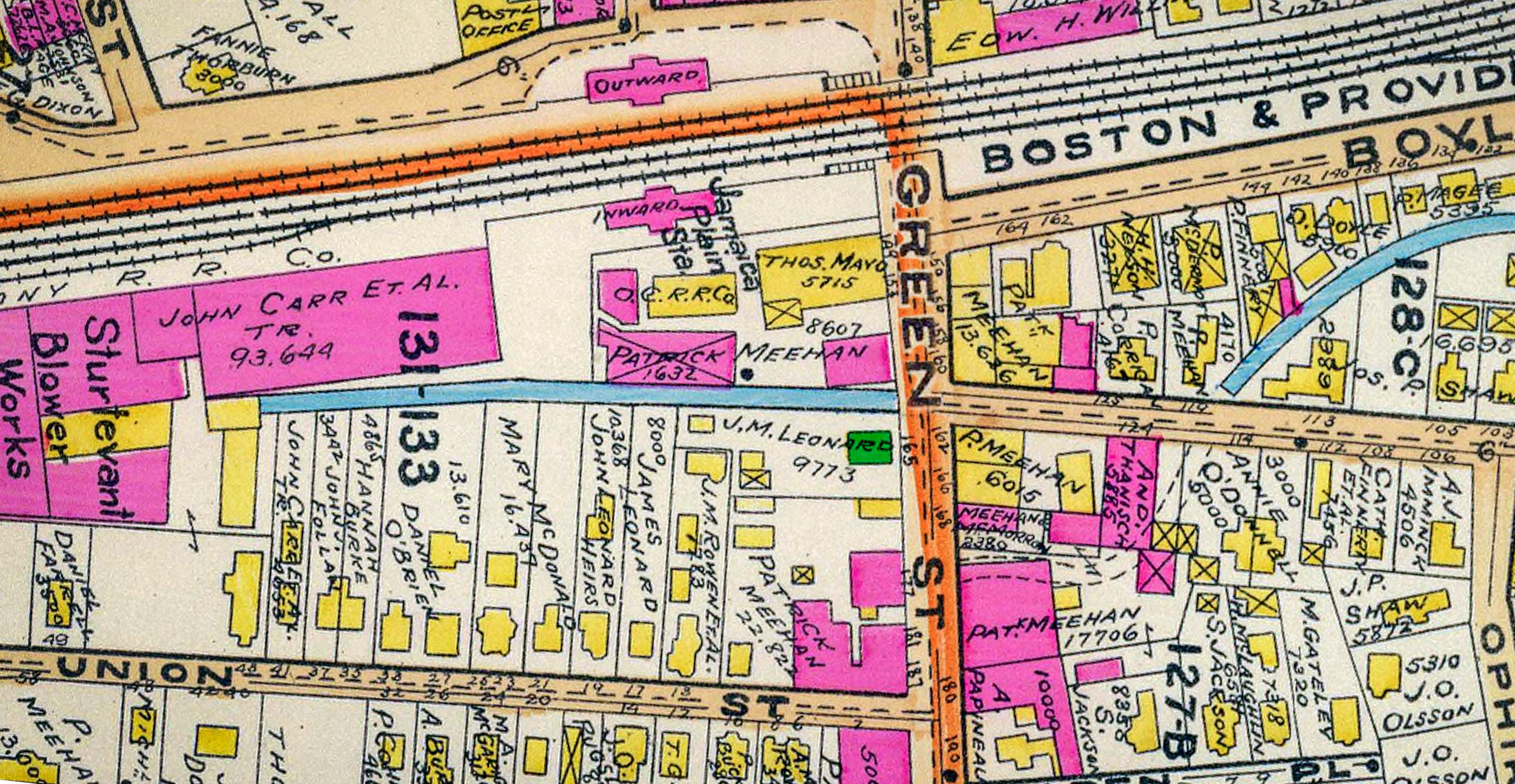
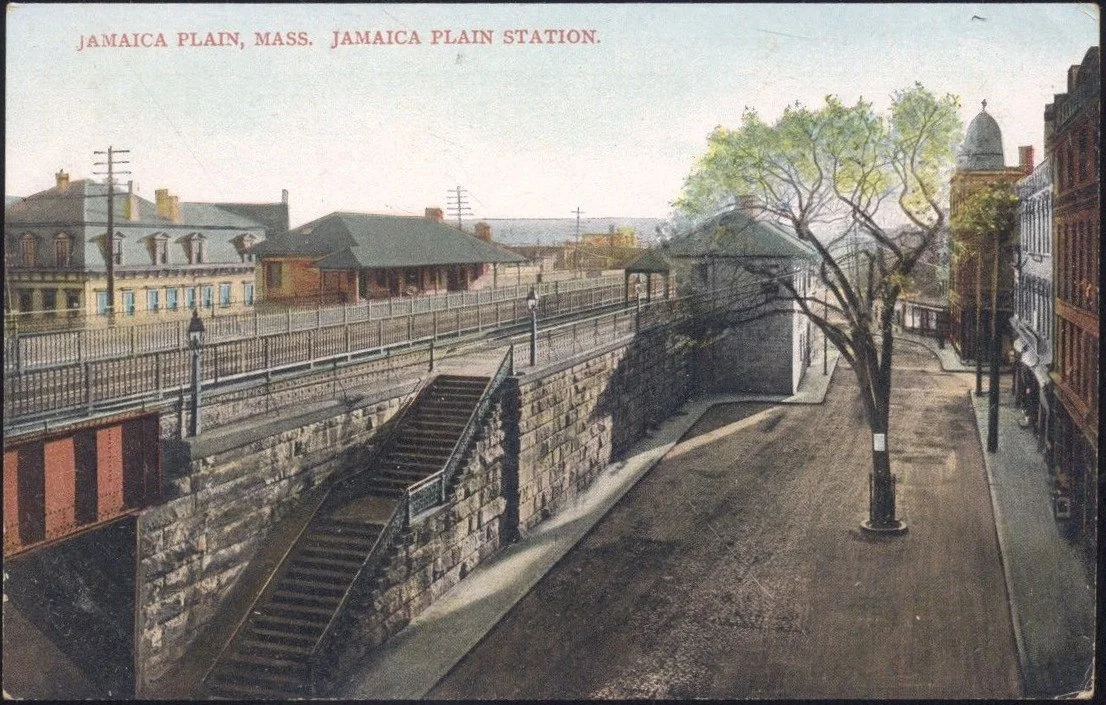
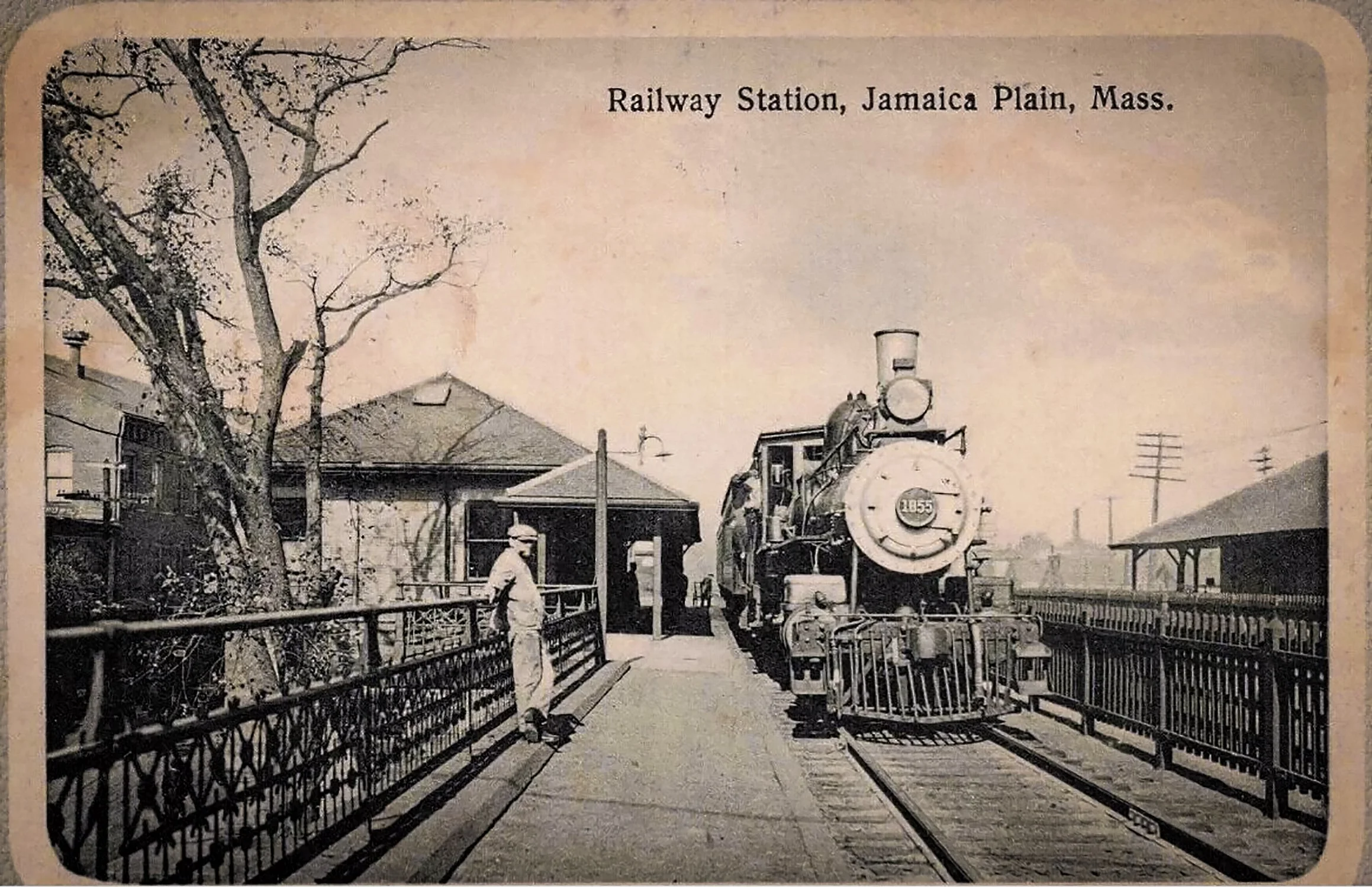
Green Street was one of Jamaica Plain’s earliest and most important east-west thoroughfares. The street dates back to 1836 and linked the Norfolk and Bristol Turnpike (now Washington Street) at its east end to the Boston & Providence Railroad (now MBTA/ Amtrak) and Centre Street beyond to the west. Over the next 70 years, Green Street transitioned from a rural, residential corridor to a densely built street of mixed uses. Industrial, commercial and residential development along Green Street was triggered by rapid population growth, proximity to industrial sites along the Stony Brook, and access to regional transit. Most notably, development was spurred by the Boston & Providence Railroad opening a station at Green Street in 1841 (on the site of the present MBTA station). Many of the handsome, brick apartment houses and industrial buildings from that era still exist today, creating a striking historic sub-district between Washington and Amory Streets in Jamaica Plain.
-
Four buildings within the Green Street (East) Area were built, in whole or in part, for equine transportation purposes. The first is the Second Empire style Alfred Papineau Livery Stable and Events Hall at 180-186 Green Street built in 1879, joined by the Romanesque Revival-style Patrick Meehan Carriage Manufacturing Building at 172-178 Green Street built in 1890, which was built to house the Thanisch Carriage Shop on the first floor; the Classical Revival-style Thanisch Carriage Factory extension at 124-128 Brookside Avenue, built in ca. 1895 to expand the Thanisch operations; and the 1891 Patrick Meehan Stable built behind his manufacturing building. They are all rare surviving examples of their use in Boston. The two carriage manufacturing buildings are two of only three that still exist in Boston. Similarly, the two commercial stables are two of only three left in the city.
Green Street (East) also includes a mix of residential buildings, including three of the earliest surviving wood-frame, single-family dwellings on Green Street. The houses at 190, 194 and 196 Green Street were all built in ca. 1845, when the suburban ideal strove for a garden setting. They were all built in the picturesque Gothic Revival style by housewright Joshua Fernald.[ii]
Subsequent transportation improvements along Washington Street in Jamaica Plain, including the introduction of the horse-car trolley in 1856, and electric streetcar service in 1889, increased access and demand for residential development along Green Street. Single-family dwellings were replaced by larger-scale multi-family buildings. By the 1890s, local investor and entrepreneur, Irish immigrant Patrick Meehan (1834-1916), owned most of the land east of the railroad tracks along Green Street. Among the many buildings he built were the two large-scale, brick apartment houses – the 1890 Hotel Morse at 181-187 Green Street, built in the Queen Anne style; and the 1894 Hotel McKinley, at 4 Union Avenue, built in the Classical Revival style. Both were designed by George A. Cahill who himself lived in Jamaica Plain. These two apartment houses were the first of their size in Jamaica Plain.
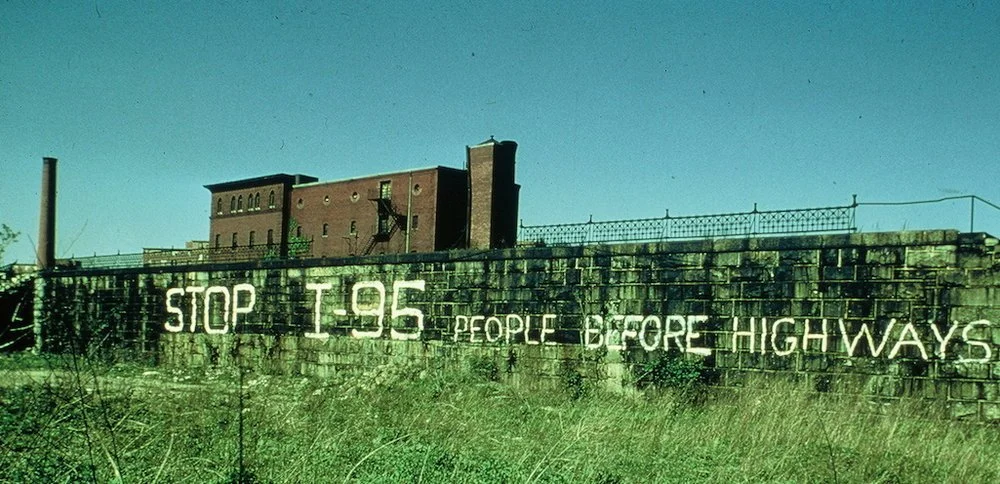
In the 20th century, developments such as the Washington Street Elevated (1905) and the proposed Interstate 95 highway extension along the railroad right-of-way cast a dark shadow over Green Street’s prospects. After more than 700 homes and businesses were bulldozed in the area, Jamaica Plain, along with surrounding communities, protested against the destruction the highway project was bringing, and in 1972 the project was cancelled. The Southwest Corridor was established for a mix of mass transit, open space and recreation. As part of the project, in 1987 the Orange Line was moved from above Washington Street and submerged, and a new station was opened at Green Street and Amory. The Washington Street Elevated was demolished, bringing light back to Green Street. As a result of this new wave of transportation improvements, Green Street (East) has been reinvigorated as a location for commercial and residential investment.
[i] This history is based on the MHC Area Form prepared by Eric Dray, Preservation Consultant, for FHGS.
[ii] 194 and 196 Green Street are shown in the MHC Area Form but subsequently excluded from the proposed district.
More on History & Development
-
Explore the early history of the Green Street neighborhood and view historic photos.
-
Discover how transportation shaped Jamaica Plain and the Green Street (East) District—from horse-car trolleys and electric streetcars to the elevated rail and the Orange Line. Explore historic photos and stories.
-
Explore the dramatic history of Egleston Square—from elevated trains and threatened highways to community activism that reshaped the neighborhood.
-
Learn more about historic buildings in the proposed Green Street East National Register District.
-
Learn more about other historic buildings in the Green Street area.
Access the complete HBI report on Egleston Square: Read the HBI report
Learn more from the Jamaica Plain Historical Society: Visit the JP Historical Society website
View the full National Register of Historic Places Registration Form for the Green Street (East) Historic District, October 2025: Read the registration form